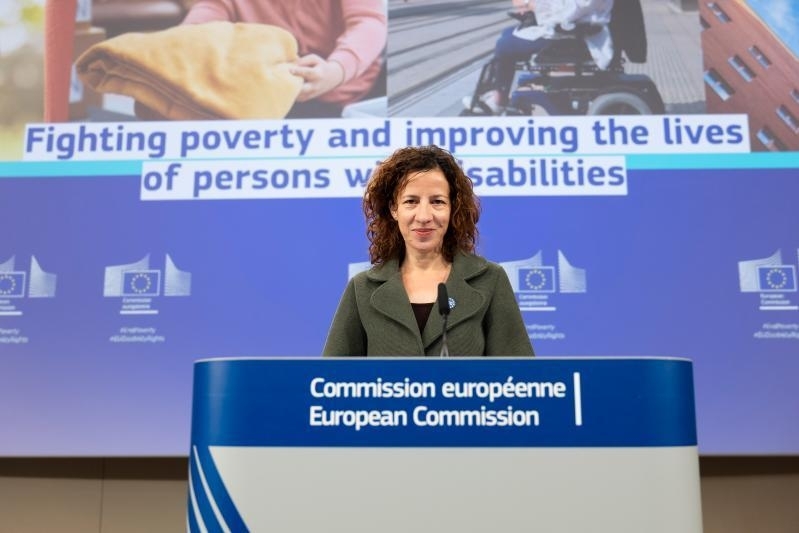
The European Commission’s new Anti-Poverty Strategy charts a path toward the ambitious goal of eradicating poverty by 2050 and reducing the number of people at risk of poverty or social exclusion by at least 15 million by 2030. It represents an essential piece in implementing the European Pillar of Social Rights.
Social economy at the heart of delivery
The new Strategy and its accompanying documents deserve praise for clearly positioning the social economy and work integration social enterprises as central to achieving this vision. The Communication effectively recognises the social economy as a key partner, highlighting its unparalleled capacity to expand access to essential services and to create quality jobs and training opportunities for groups underrepresented in the labour market.
The Strategy is anchored by a robust framework for action: the Principles for effective anti-poverty policies. These principles are designed to guide the implementation of anti-poverty policies at the national and local levels. Crucially, they explicitly comprise supporting social enterprises' jobs and social inclusion services (such as counselling, coaching, mentoring and outreach services), promoting partnering with them, and fostering hands-on skills tied to employability. These principles can serve as a coherent reference point to integrate social enterprises in anti-poverty and other social policies. The reference to the 2023 Council recommendation on developing social economy framework conditions further guides its implementation.
The Strategy also rightly champions the convergence of social and circular objectives by emphasising how reuse, refurbishment and repair activities directly reduce barriers to cost affordability. Social enterprises’ second-hand shops are explicitly highlighted as examples of social economy initiatives that ensure groups at poverty risk have access to basic goods. In a Union where data indicate that 38% of consumers are worried about their ability to pay their bills, the Commission encourages the future Circular Economy Act, public procurement, targeted incentives and investments in local circular infrastructure to guarantee broader outreach for reuse and repair products.
From recognition to real partnership
However, this high level of recognition must translate into the direct involvement of social economy representatives in relevant Strategy initiatives, beyond those under the Social Economy Action Plan. In particular, the planned Coalition Against Poverty with businesses and philanthropic organisations, as well as the consultation on EU action for the activation of people excluded from the labour market, are optimal opportunities to bring social economy expertise to the table—especially that of national and local actors who are first-hand witnesses to the multifaceted poverty challenges across EU communities.
Furthermore, RREUSE positively notes the emphasis on improving access to quality social services in the text. More specifically, the Anti-Poverty Strategy highlights the ongoing revisions for Public Procurement Directives and the General Block Exemption Regulation as key opportunities to support its objectives. They rightly offer a chance to support inclusive recruitment, training, and improve access to finance and tendering opportunities for social enterprises, including through better use of reserved contracts for work integration.
Matching ambition with real funding
While the strategic direction is highly encouraging, a significant concern overshadows the implementation phase: the reliance on the current EU budget framework to support the Strategy.
The Communication recalls substantial funding already earmarked under the current budget, such as the €50.2 billion from the European Social Fund Plus and resources from the Recovery and Resilience Facility. However, while the commitment of at least €100 billion for social policies in the next EU long-term budget is mentioned, concerns remain about how effectively the next Multiannual Financial Framework can advance social and environmental objectives in its proposed format.
Tackling poverty and securing a just transition to climate neutrality require sustained, ambitious and ring-fenced funding. This is especially needed in light of ongoing national budget cuts that undermine public support for the social employment provided by social enterprises. If the next EU budget does not match the comprehensive ambition of this Anti-Poverty Strategy, it risks becoming a set of excellent principles without the financial muscle required to turn the European Pillar of Social Rights into reality.