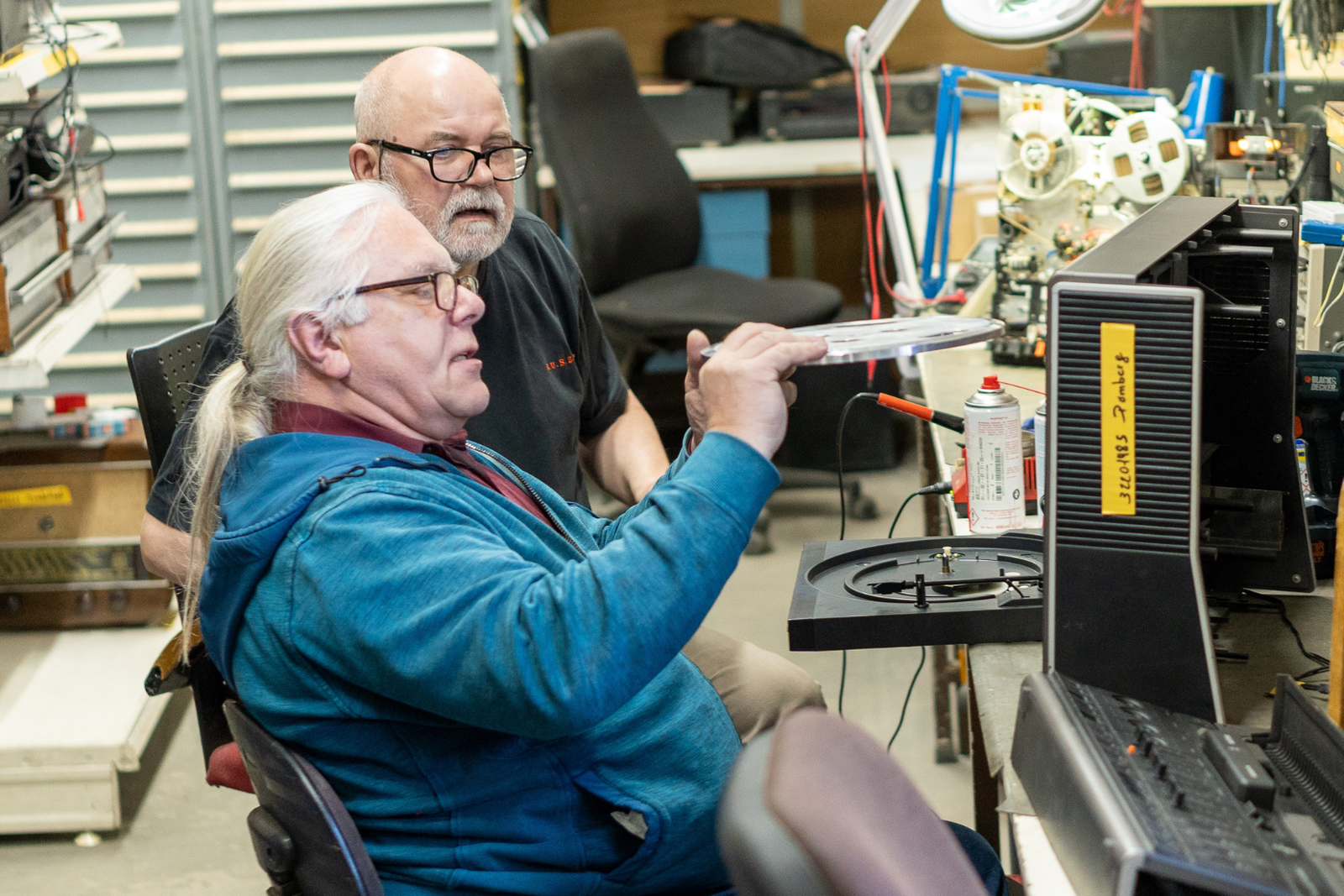
For more than two decades, the Vienna-based social enterprise R.U.S.Z has worked to make repair a practical and anchored alternative to replacement. Each year, the organisation extends the life of around 9,000 electrical appliances. It also runs a major reuse centre for large household appliances and a weekly repair café, giving people access to affordable repairs while keeping valuable products and materials in circulation.
But they have never focused only on what happens at the repair bench. R.U.S.Z's wider ambition has been to address the system that allows low-quality products designed to be discarded and replaced to enter the market in the first place.
Drawing on years of hands-on experience, R.U.S.Z brought the perspective of independent repairers into Austrian and European policy discussions. A major milestone was the Austrian standard ONR 192102:2014, which established criteria for repair-friendly electrical appliances. This work later helped open the door for European standardisation on the repair, reuse and upgrading of energy-related products, including EN 45554:2020.
The organisation’s experience shows that bearing technical expertise is not enough to influence policy because progress also depends on strong networks, well-prepared proposals and the ability to quickly act when opportunities arise. R.U.S.Z has worked with EU institutions, standardisation bodies, NGOs, research organisations, consumer groups and repair platforms to make durability and repairability more visible in the circular economy debate.
Its work also has a strong social dimension. R.U.S.Z provides vocational training for apprentices and people experiencing long-term unemployment, with increasing attention to supporting refugees. Repair therefore becomes not only an environmental service, but also a route into skilled employment.
Over the years, R.U.S.Z has helped strengthen the wider repair movement in Austria and across Europe. It founded the ReparaturNetzWerk Wien and contributed to the creation of Re-Use Austria and RREUSE, helping repair and reuse social enterprises speak with a stronger collective voice.
Several developments have supported this work. European circular economy policies, growing concern about climate change and changing consumer attitudes have all increased interest in repair. At the same time, major constraints remain: many appliances are still difficult to repair, Europe lacks sufficient repair infrastructure and essential skills, and independent repair services continue to compete with a market that often makes replacement easier and cheaper.
R.U.S.Z is now working to replicate its model through social franchising, sharing its experience in repair, reuse and product-service systems with partners beyond Vienna.
Everything this social enterprise has been doing is to empower people: the beneficiaries are both present and future generations. Consumers gain access to repair services, trainees develop skills and are offered employment opportunities, and fewer appliances become waste. More broadly, R.U.S.Z demonstrates how a social enterprise can use practical experience, partnerships and advocacy to help move Europe from a throwaway economy towards a circular economy, built around durability, repair and reuse.