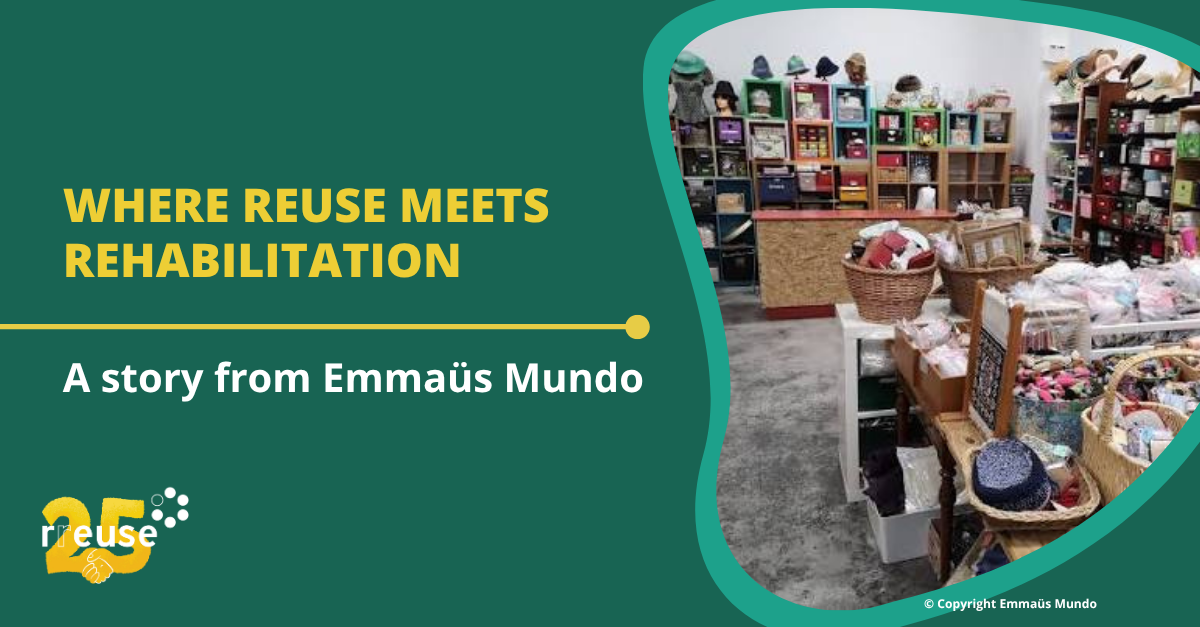
Working at the intersection of social inclusion and the circular economy, Emmaüs Mundo has built furniture refurbishment and bicycle repair workshops inside detention centres, providing training and socio-professional support to people at the end of their sentences. The goal is not only to teach a skill, but to help individuals rebuild a daily routine, develop work habits, and leave prison with something more tangible than good intentions.
The results speak for themselves: eight out of ten participants in Emmaüs Mundo's programmes find employment upon release. That figure is striking in a context where former inmates face some of the most severe barriers to labour market entry.
Emmaüs Mundo collects around 1,400 tonnes of products per year, of which more than 30% is reused and 60% recycled. The workshops inside prison contribute to this impact while serving a population that has few other meaningful ways to participate in the economy during their sentence.
What Emmaüs Mundo demonstrates is that circular economy principles and social rehabilitation are not separate agendas. The organisation inherited this understanding from the Emmaüs movement itself, founded after World War II on the idea that collecting and reusing unwanted goods could be both a means of survival and an act of solidarity. Decades later, that founding insight is being applied in some of the most challenging and overlooked spaces in society and proving its worth.
For the 25th anniversary of RREUSE, we are highlighting some of the amazing work carried our by our members. You can find more information on the Emmaüs Mundo project in our report “Putting people and skills at the core of the circular economy: 18 stories from social enterprises”.