The Council has adopted a Recommendation on human capital in the European Union, aiming to help Member States tackle labour and skills shortages, with a view to boosting competitiveness and resilience. Notably, the Council calls on Member States to boost skills acquisition with particular attention to ensuring broader outreach to underrepresented groups, core profiles such as circular economy sorters and collectors, and the social economy. The Recommendation also emphasises the great value of work-based training.
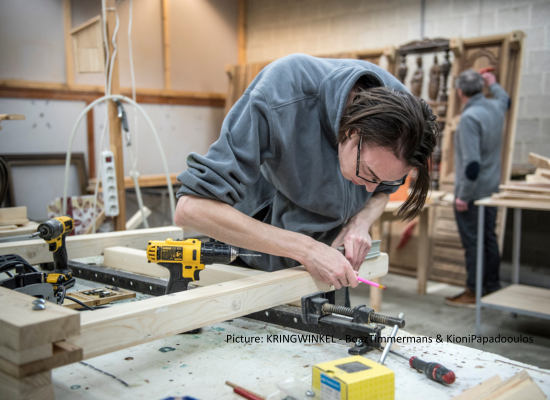
Social enterprises active in reuse, repair, and recycling are particularly aware of the importance of on-the-job training, which accounted for four out of five adult learners in 2022, according to the Recommendation. Work-based training is a particularly accessible and successful way for these skills to reach workers, especially underrepresented groups. Due to their targeted and supportive work environments, social enterprises are thus uniquely positioned to effectively promote circular, digital, and interpersonal skills, contributing to workers' mobility, social cohesion, and resource efficiency.
The 2026 Recommendation on human capital is a positive step, recognising and urging action on skill challenges. RREUSE especially welcomes:
- The emphasis to redirect training support to reach low-skilled and underrepresented groups, such as low-qualified, migrants, persons with disabilities and Roma people.
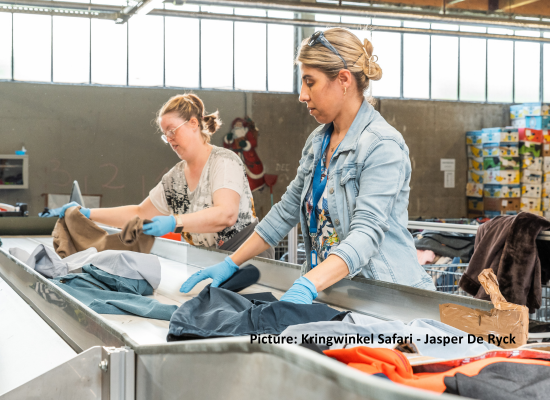
- The urgent need to develop capacity in core circular tasks, including skills at the level of waste collectors and sorters, especially in light of intensifying skill shortages.
- Linking cohesion policy funds like the European Social Fund Plus, InvestEU, public procurement and state aid rules to support training, upskilling and reskilling.
- Strengthening Vocational Education Training (VET) and making it more inclusive for underrepresented groups.
- Very importantly, the Recommendation also calls on national governments and EU institutions to reassess relevant provisions to provide better skills incentives for the social economy, including via the mobilisation of public-private partnerships.
Despite encouraging elements, the success of the 2026 Recommendation will depend on the willingness of Member States and the EU to make inclusive training a priority. In a context of budget discussions that risk undermining the social economy ecosystem and new priorities risking overshadowing social cohesion and environmental protection spending, both at the EU and national levels, the Recommendation will require a shift in prioritising all kinds of skill development opportunities.
Too often, informal and non-formal learning opportunities, including via social economy enterprises, have been neglected. Yet, these educational approaches are the very same training opportunities that are often more accessible to workers, including those who face systematic obstacles (e.g., price and geographic barriers, or care responsibilities) to accessing formal educational opportunities. Furthermore, emphasis on promoting circular skills has notoriously focused on technological skills, ignoring core manual circular tasks that are intrinsic to promoting reuse and preparation for reuse. This gap has also been reflected in the lack of targeted funding.